How opening-triggered audio works, when light sensing is suitable, and what to test before committing to a box design.
A light sensor sound module plays a prepared audio message when the sensor receives sufficient light. In a closed box, the sensor is shaded. Opening the lid changes the light at the sensor and can start playback. This makes the opening itself part of the experience: a greeting, a short brand story or a musical cue can begin as the recipient sees the gift. The electronics must be designed together with the box, because the sensor reacts to light rather than directly measuring the lid angle.
1. Choose the experience before the trigger
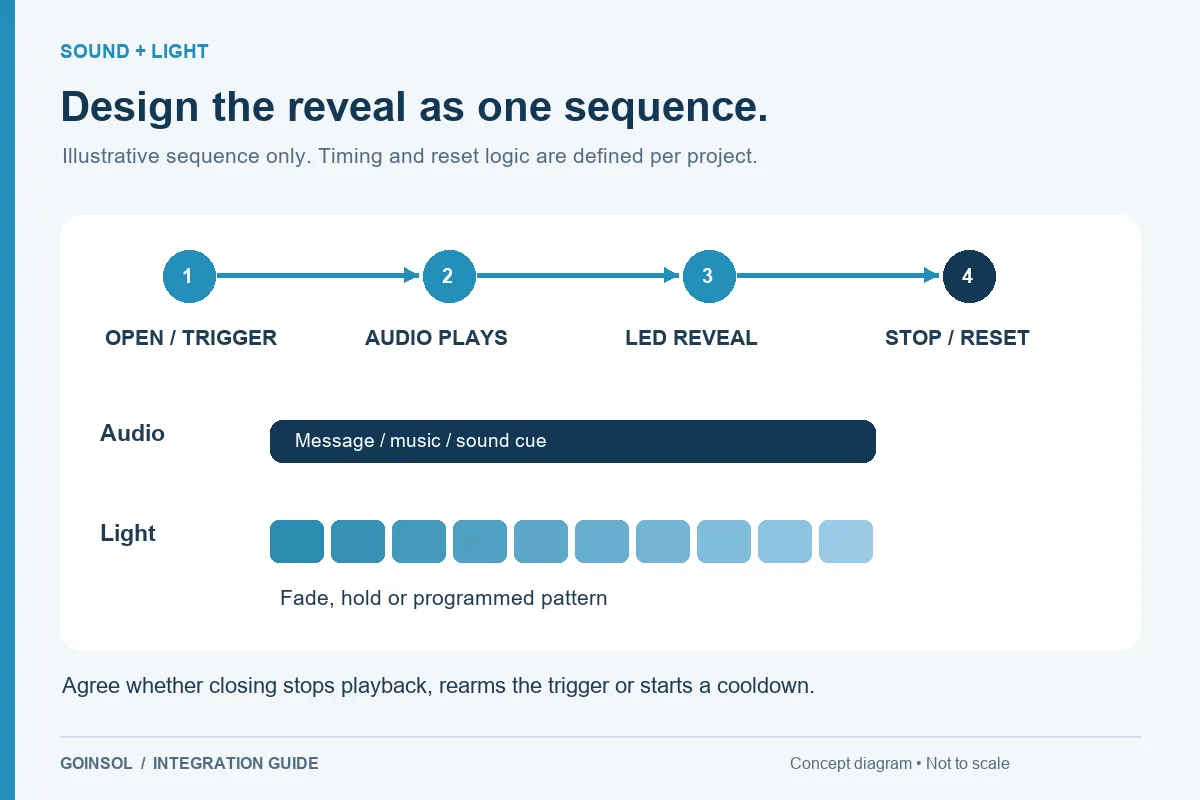
Start with a simple sequence: closed and waiting; lid opens; audio starts; audio finishes; box closes; module is ready for the next opening. Decide what should happen if someone closes the lid during playback, opens it twice quickly or leaves it open. Finish-current-message, stop-on-close and replay-after-reopening are different behaviors. Write the desired behavior explicitly; do not assume that every sound chip implements it in the same way.
2. Check whether light sensing fits the environment
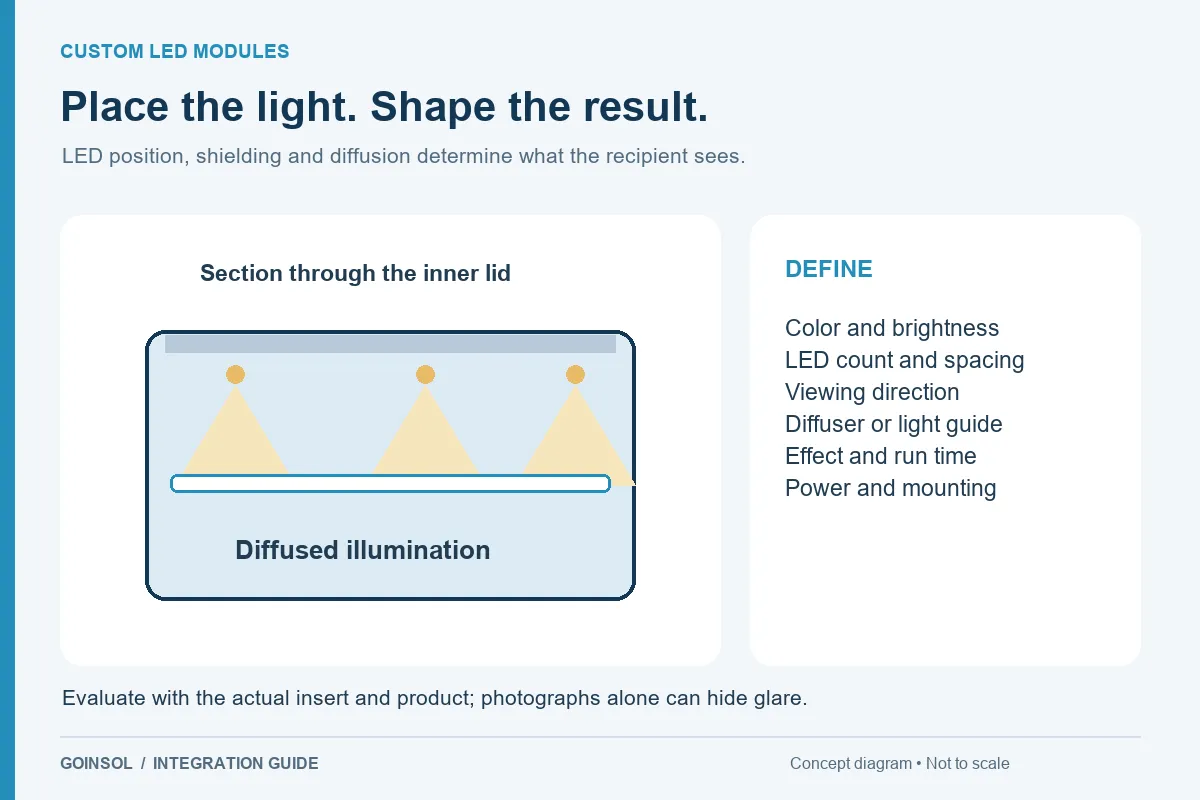
Light activation is useful when the closed box shades the sensor and opening reliably exposes it. A dark restaurant, a deep insert, a ribbon or the gift itself may prevent sufficient light from reaching the sensing point. Conversely, a loose lid or translucent material may admit light before the intended reveal. Review ordinary room light, dim light and daylight. If reliable operation is needed independently of ambient light, discuss a mechanical or magnetic opening detector rather than treating light sensing as universal. The appropriate option depends on the module and structure.
3. Prepare the audio and playback brief
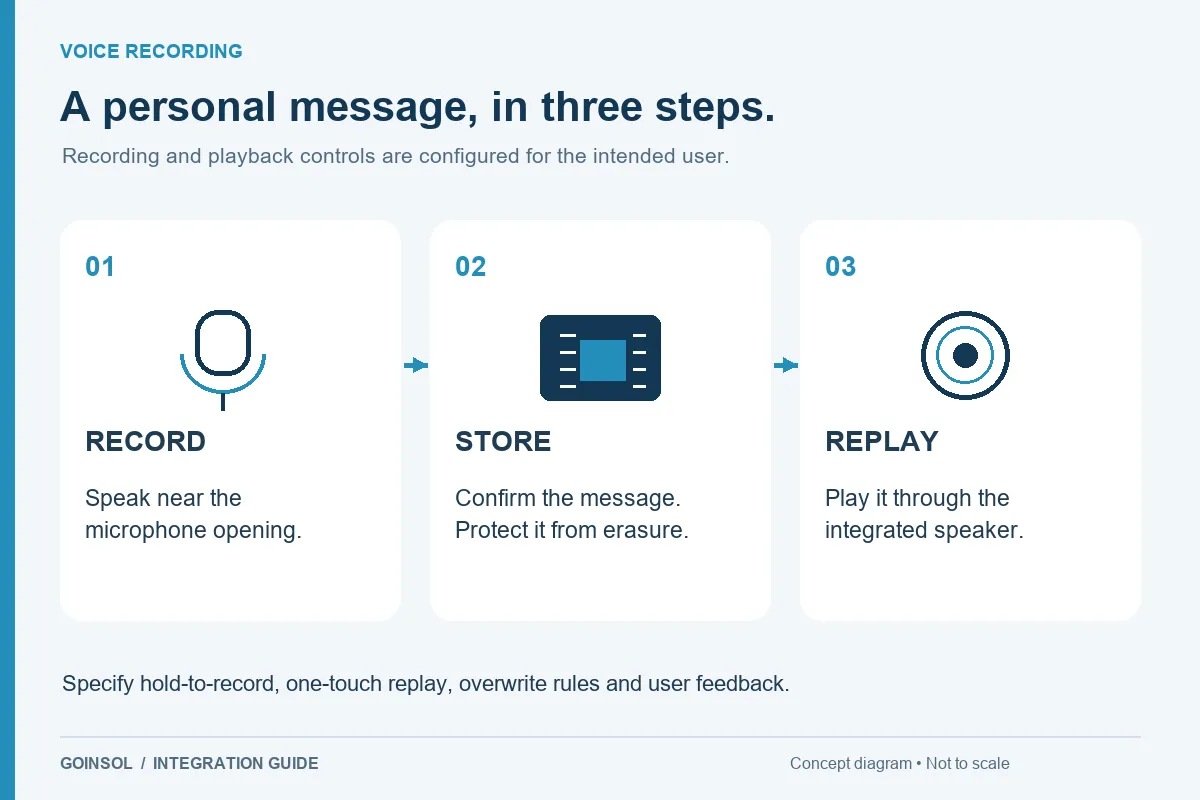
Provide the intended message or music file, its approximate length, the target listening distance and the setting in which it will be heard. Keep the important words near the beginning. A quiet greeting in a bedroom and a promotional cue in a busy shop need different acoustic decisions. An MP3 or WAV reference is useful for review, but the final encoding and memory requirements must be checked for the selected design. Supply audio you have permission to reproduce. Do not infer playback quality from the source file alone.
4. Give the speaker a route to the listener
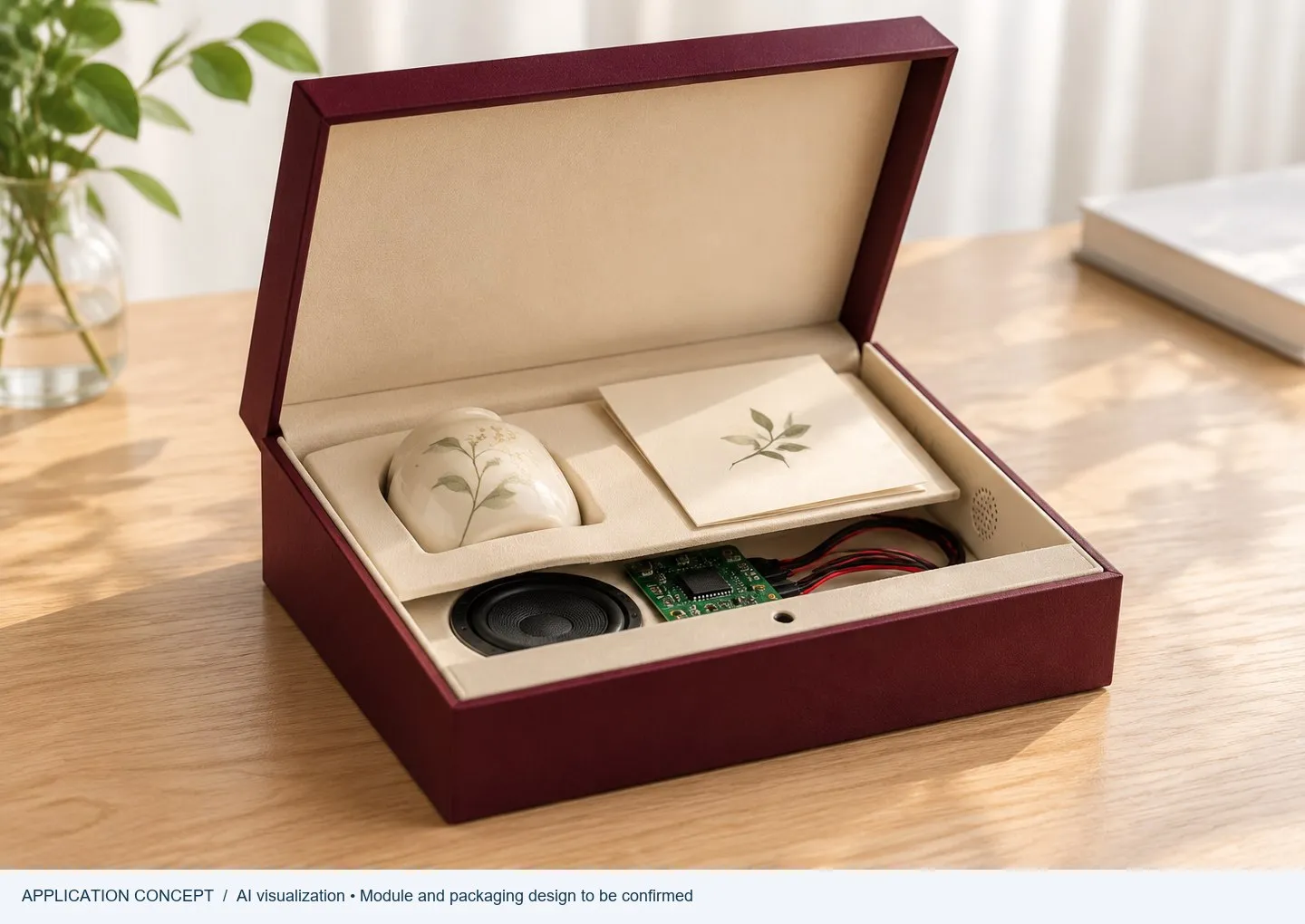
Mark the speaker location and a suitable sound opening. Fabric, foam, a tight recess or an enclosed cavity can change both level and clarity. The speaker needs sufficient depth, including clearance for its moving parts and wiring. A larger or louder speaker may also change the power requirement. Review the sound in the assembled packaging, with the real insert and gift in place; testing a loose board on a desk gives an incomplete result.
5. Plan storage and power
Tell the module supplier how long the product may sit in storage and how often it is expected to play. Battery performance depends on standby current, audio length, playback level, cell choice and temperature. A claim such as hundreds of plays is not meaningful unless the operating conditions are stated. Discuss how the product is isolated during shipping, how first use begins and whether the cell is replaceable. Retention and user access must suit the destination market and intended users.
6. Review a sample in the actual box
Check trigger behavior with the lid fully shut, slightly open and repeatedly opened. Test the expected lighting conditions, the selected audio, sound level at a realistic distance, closing during playback and recovery after a power interruption. Confirm sensor exposure, speaker clearance, wire routing and assembly access. Record the module revision and test setup so a later sample can be compared fairly.
What to send GOINSOL
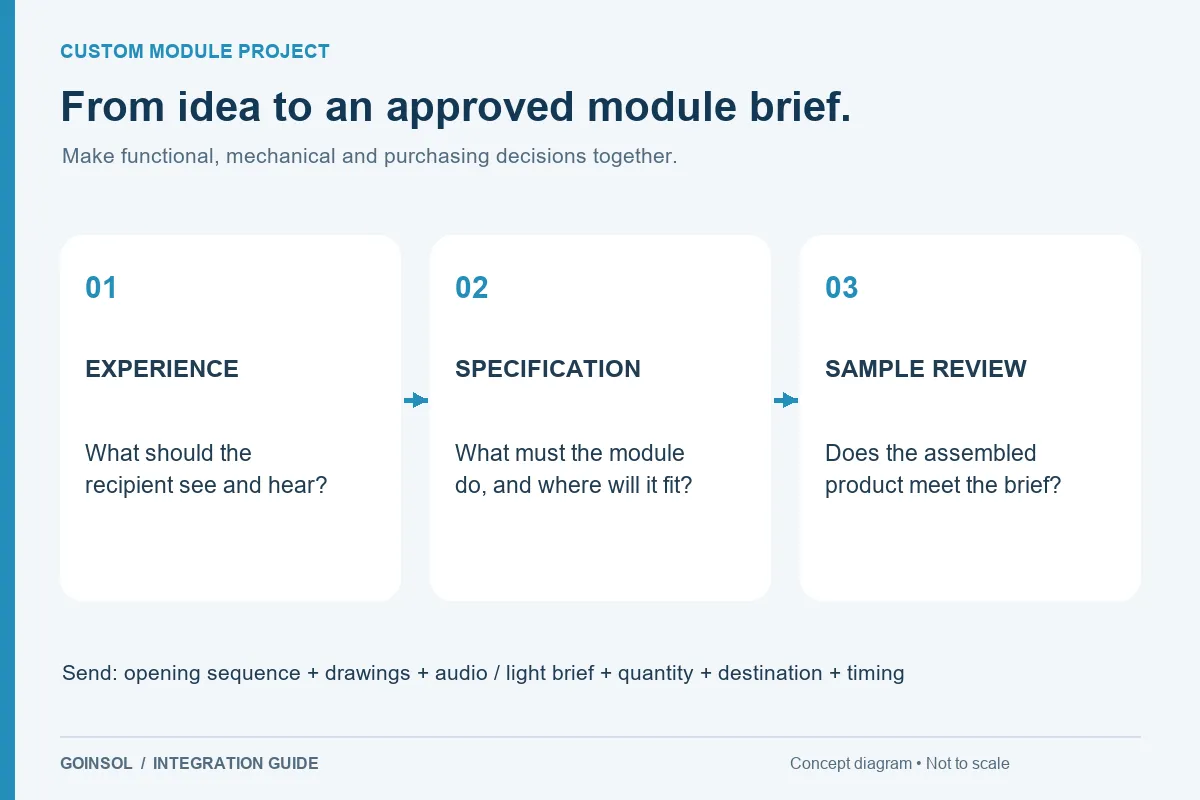
Send a box drawing or photos, usable internal dimensions, opening sequence, likely lighting conditions, audio file, desired replay logic, storage and use assumptions, expected quantity and delivery market. GOINSOL supplies the electronic module for integration into customer- or partner-made packaging. The final trigger, dimensions, power arrangement, price and schedule are confirmed against the project brief.
DISCUSS YOUR APPLICATION