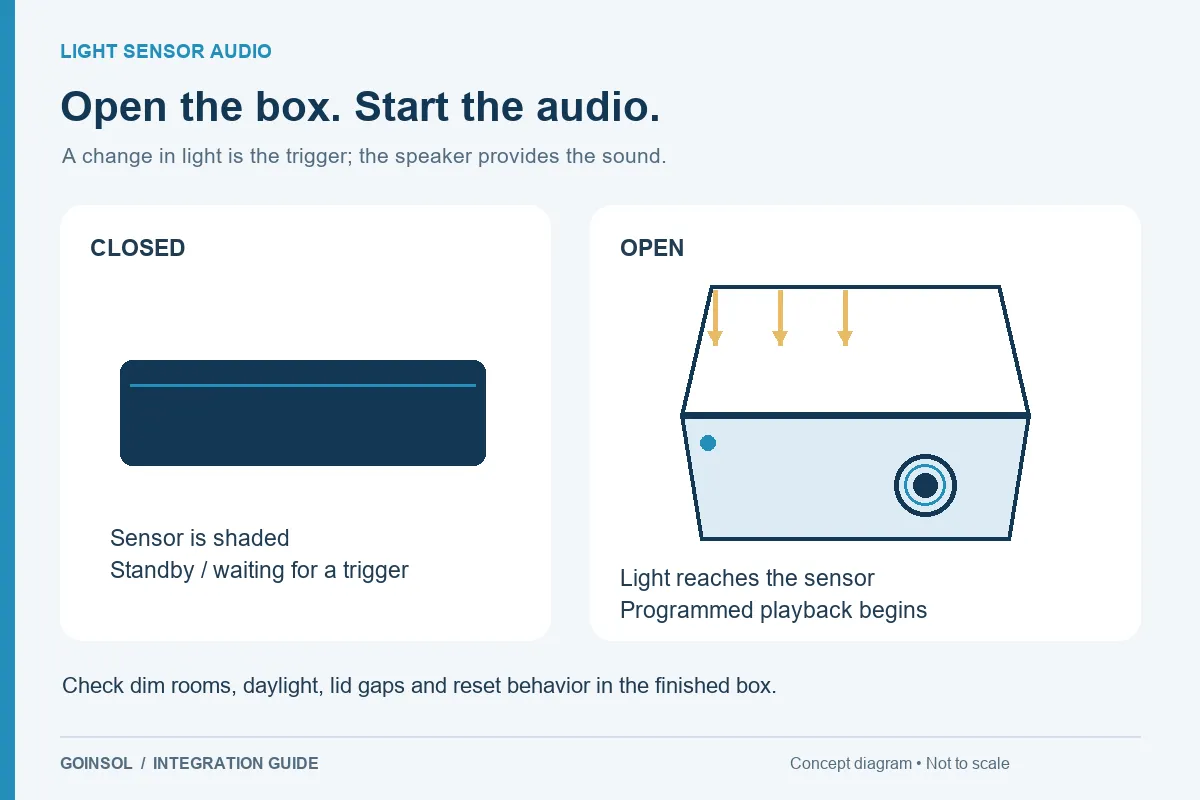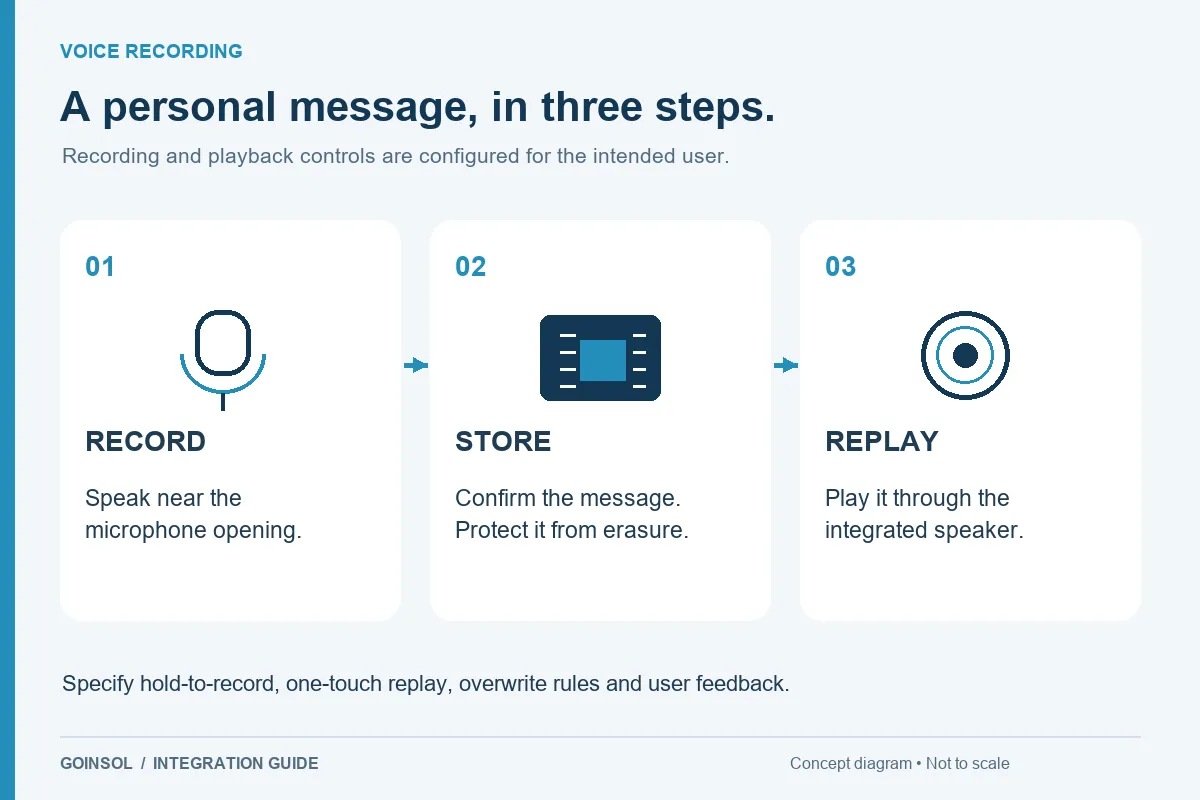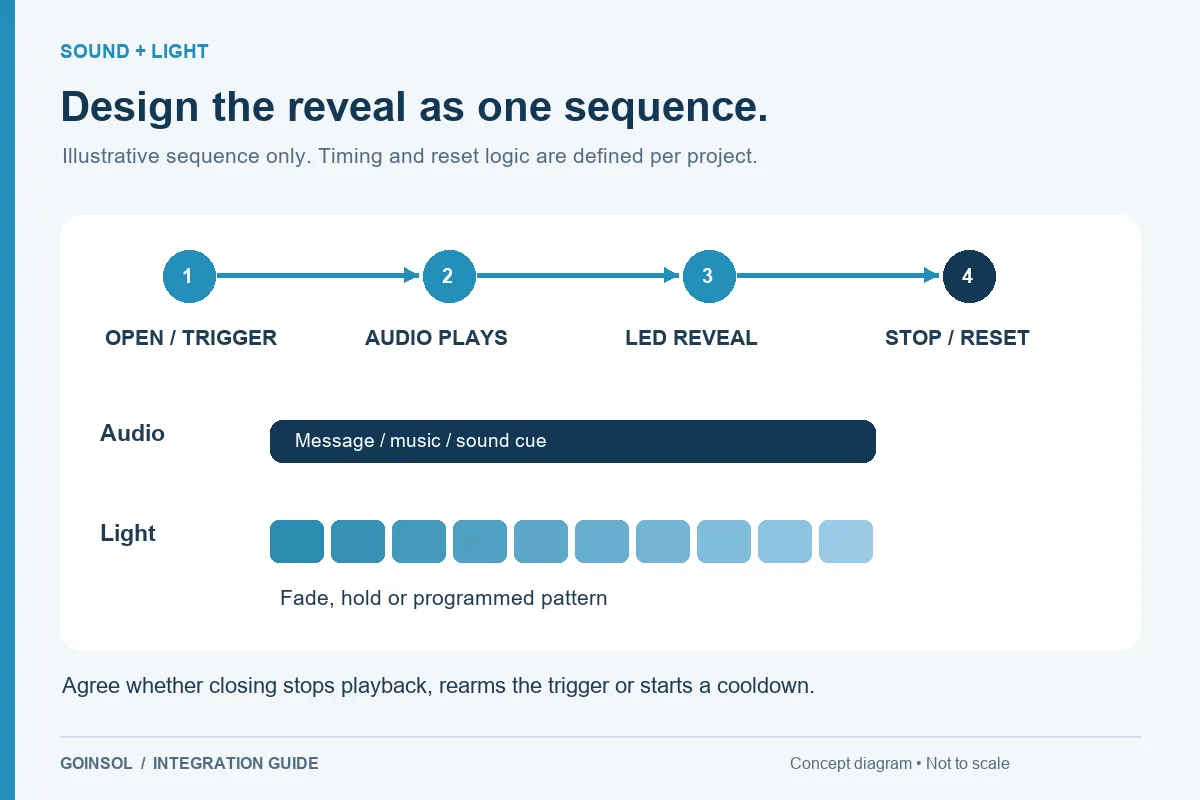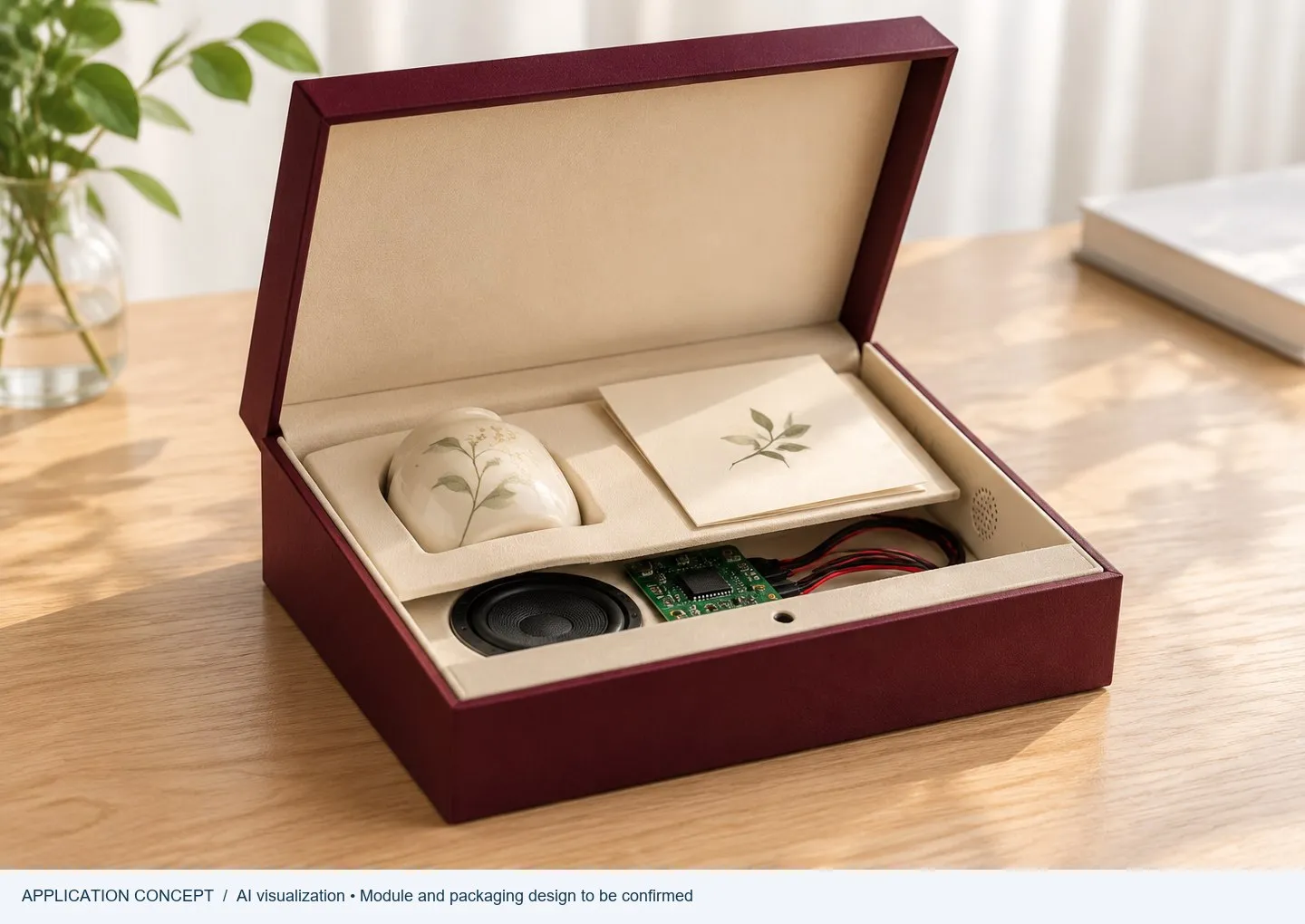
Separate standby, active use and peak load so battery expectations can be tested under clear conditions.
Battery planning for a gift box starts before the first opening. The product may spend time in assembly, transport, a warehouse and a retail display before it reaches the recipient. After that, it may play a short message occasionally or operate repeatedly as a demonstration. A useful power brief describes both stages. A battery capacity figure or an isolated play-count claim cannot describe the entire experience.
1. Separate standby from active operation
Standby includes the electronics waiting for a trigger and any sensing or leakage paths. Active use includes the controller, audio amplifier, speaker load and LEDs while the effect runs. Battery self-discharge and environmental conditions also influence the available energy over time. Tell the supplier the intended storage period, likely temperature conditions and the number and length of operations. A display unit and a gift stored for an occasion require different assumptions.
2. Describe the duty cycle
State how often playback occurs, how long it lasts, the required listening level and how many LEDs operate for how long. Define what happens when the lid remains open. A timed light effect and continuous illumination have different power demands. If a message can be replayed repeatedly, include a realistic use pattern. Where expectations are uncertain, compare a modest-use scenario with a more demanding one rather than publishing one unsupported life estimate.
3. Review peak load as well as average energy
Sound and light may draw their highest current at the same time. The selected cell must support the required load without an unacceptable voltage drop. A prototype that works at low volume or with fewer LEDs does not validate the final combined effect. Battery chemistry, construction, temperature, wiring and contact resistance all influence the result. Engineering review should consider the operating voltage range and behavior near the end of useful battery life.
4. Plan first use and service access
Discuss whether the product needs a shipping isolator, master switch or another first-use arrangement. The user should understand how to activate the gift without damaging the box. Decide whether the cell is intended to be replaced, how the compartment retains it and who may open it. Button or coin cell access, retention and labeling need review for the target users and destination market. The electronic module does not by itself establish compliance of the complete consumer product.
5. Measure before making a promise
An initial engineering estimate combines measured current in each state with the expected time in that state and usable battery performance. It should identify the selected cell and assumptions. Sample checks should include normal playback, simultaneous audio and LED operation, repeated use, restart and any low-voltage behavior relevant to the design. Real-time storage evidence and accelerated assessments are different kinds of evidence; neither should be described loosely as guaranteed shelf life.
6. Consider the whole product lifecycle
Coordinate assembly testing so units are not repeatedly triggered without tracking the effect on the supplied battery. Think about battery replacement and separation of electronics from packaging at end of use. Do not describe a mixed electronic package as recyclable solely because its outer box is paper. Responsibilities for instructions, market-specific requirements and final product validation should be agreed between the brand, packaging partner and electronics supplier.
What to send GOINSOL
Provide storage duration and conditions, plays or activations expected, audio and light duration, playback environment, power space, preferred battery arrangement, first-use behavior, service access, destination and users. The resulting estimate and validation plan can then refer to a defined use case. Final life claims require agreed conditions and evidence from the selected configuration.
DISCUSS YOUR APPLICATION